
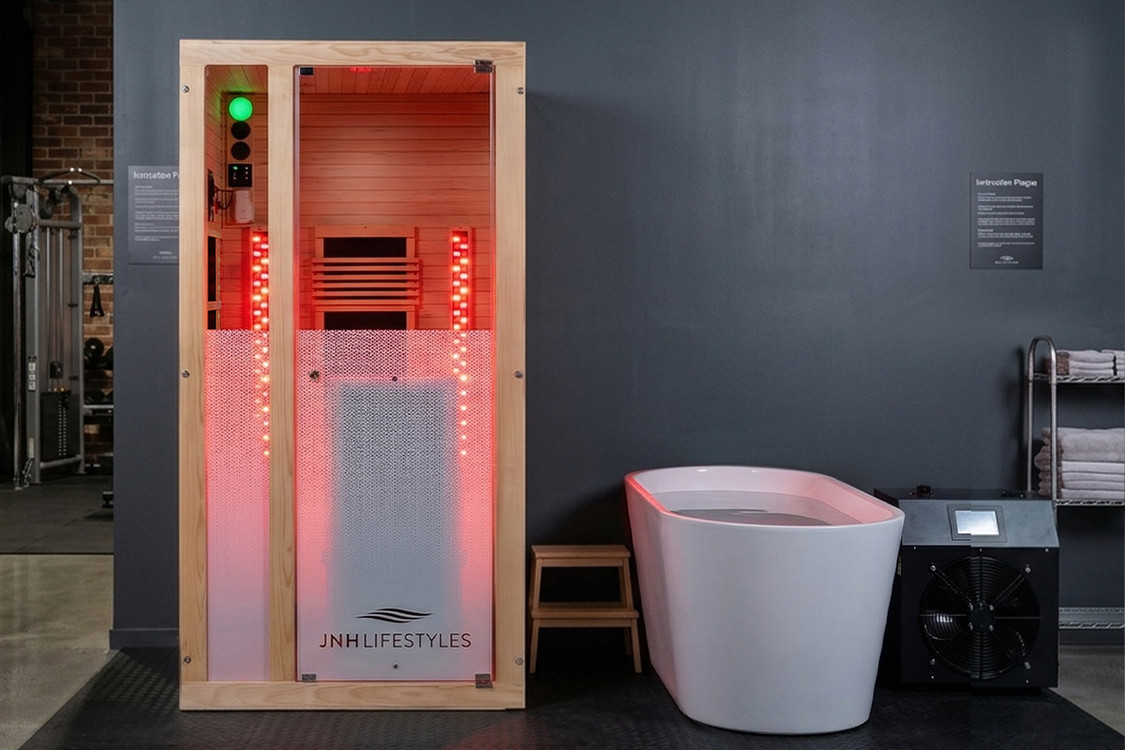
A More Effective Way to Recover, Reset, and Perform
Contrast therapy using an infrared sauna and cold plunge is one of the most effective recovery methods for improving circulation, reducing muscle soreness, and supporting both physical and mental performance.
At its core, infrared sauna and cold plunge contrast therapy involves alternating between deep heat exposure and cold immersion to create controlled physiological stress that the body adapts to over time.
Most people think of contrast therapy as simply going hot then cold. But the type of heat you use, and how deeply it affects the body, changes what happens next.
Readers still comparing far-infrared, full-spectrum, and high-heat sauna systems can use our infrared sauna buying guide to understand which heat experience best fits their goals.
When you use an infrared sauna before cold exposure, you’re not just warming up. You’re preparing the body at a deeper level that directly changes how the cold phase behaves.
And that difference starts with what contrast therapy is actually doing inside the body.
What Contrast Therapy Is Really Doing (Beyond the Basics)
At a surface level, contrast therapy is about alternating heat and cold. But internally, it’s about how the circulatory system responds to repeated expansion and compression.
In heat, blood vessels open, and circulation becomes more fluid. Muscles feel looser, and blood moves more freely through tissue.
Then cold arrives and reverses that state quickly. Blood is pushed inward, vessels tighten, and internal pressure shifts.
When this cycle repeats, the body stops reacting to each phase individually and instead begins responding to the transition itself.
Heat expands. Cold compresses. And the shift between the two creates a rhythmic movement through the vascular system that would not happen in either state alone.
That movement becomes especially important once deeper tissue is involved, which is where infrared changes the equation.
Why Infrared Sauna Changes the Equation
Unlike traditional heat exposure, infrared doesn’t rely on air temperature. It uses light waves to heat the body directly, reaching deeper layers of muscle and connective tissue.
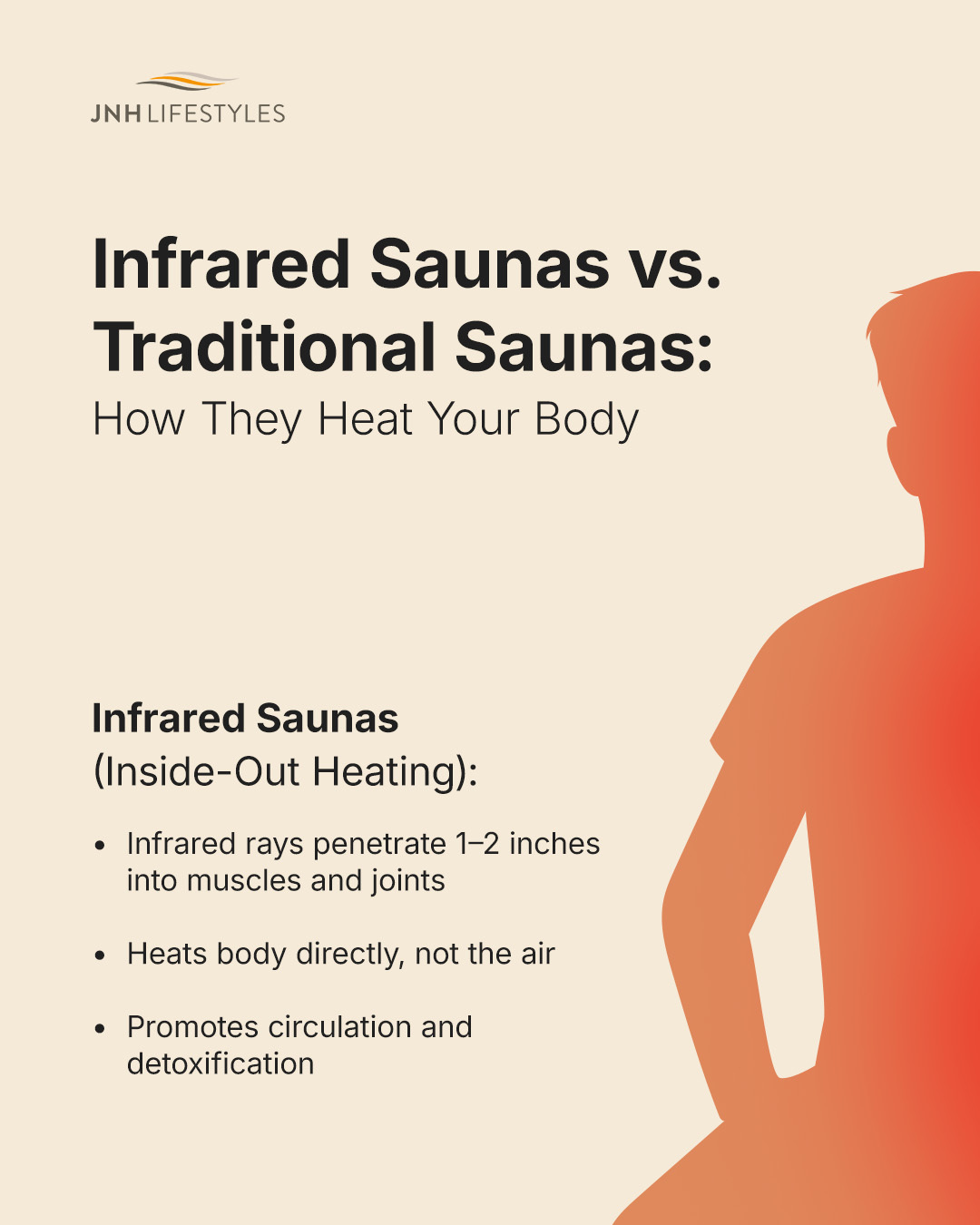
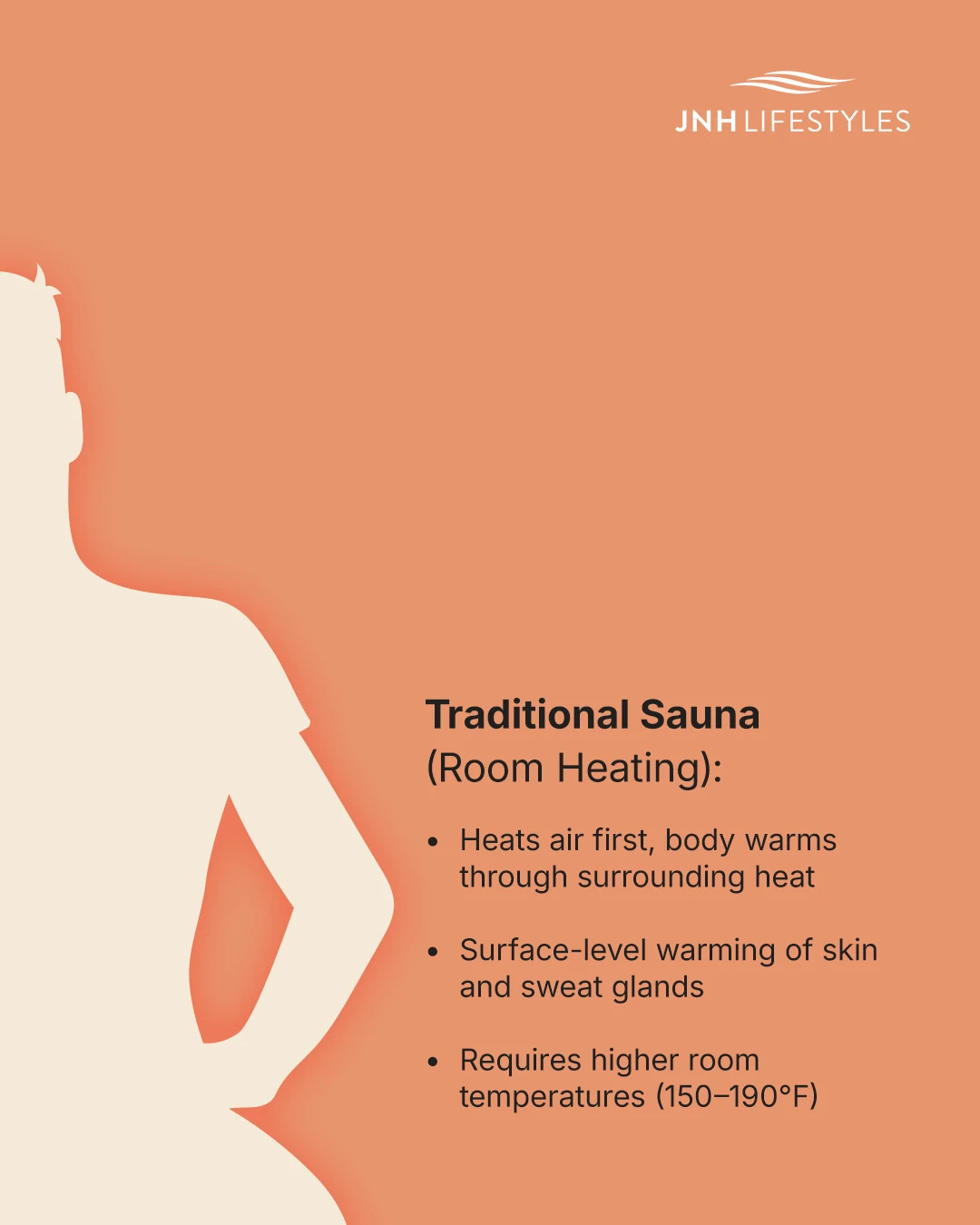
This means the warming phase isn’t just surface-level; it begins closer to where circulation actually happens inside muscle tissue.
Traditional saunas heat from the outside in, creating a faster but shallower response. Infrared creates a slower but deeper thermal buildup, which changes how prepared the body is when cold exposure begins.
| Heat Type | Mechanism | Effect on Tissue |
|---|---|---|
| Traditional sauna | Air heats skin | Surface warming |
| Infrared sauna | Light penetrates tissue | Deep muscle heat |
Because of that deeper activation, the transition into cold doesn’t just feel stronger; it produces a more pronounced shift in circulation and pressure dynamics.
And that shift becomes even more noticeable when the contrast cycle begins repeating.
A Stronger Contrast (Why the Pairing Works)
Once the body has been heated more deeply through infrared exposure, the response to cold becomes noticeably more pronounced.
Instead of a simple temperature shift, what you get is a layered physiological transition. The heat phase relaxes and expands circulation within deeper muscle tissue, while the cold phase rapidly reverses that state by constricting blood vessels and redirecting flow inward.
When these two states are repeated in sequence, the body begins responding less to each individual phase and more to the transition between them. That transition becomes the key stimulus.
In practical terms, the heat phase builds depth within the system by increasing circulation and tissue warmth. The cold phase then creates a rapid compressive response that redirects that flow. As this cycle repeats, the change between expansion and contraction becomes more efficient and more noticeable with each round.
This is why the pairing often feels different from basic hot-and-cold methods. It is not just the intensity of each phase; it is the body’s increasing responsiveness to the shift itself.
And as that responsiveness develops, the contrast effect compounds across the full session rather than resetting after each exposure.
Beyond Circulation: The Cellular Energy Layer
Infrared heat doesn’t only affect circulation. It also interacts with cellular energy systems linked to mitochondrial function and ATP production.
Inside cells, mitochondria convert oxygen and nutrients into usable energy. Near-infrared light has been studied for its ability to influence this process by interacting with enzymes involved in energy production.
So instead of acting purely as heat stress, infrared introduces a second layer of stimulus that may support how efficiently cells produce energy.
That becomes especially relevant when the body is then exposed to cold, which triggers a completely different systemic response.
What Happens When You Add the Cold Plunge
Cold immersion is the opposite end of the cycle, and it acts quickly.
When you enter cold water, circulation constricts, breathing changes, and the nervous system shifts into a high-alert state.
This is not just physical; it’s neurological.
Cold exposure is associated with increases in:
- Norepinephrine, linked to alertness and focus
- Dopamine, linked to motivation and drive
What matters most is not just the spike, but the stability that follows. Many people report a sustained sense of clarity after leaving the cold, which carries into the rest of the day.
That mental shift is part of why contrast therapy is often used not only for recovery, but for resetting performance state.
And when both phases are combined, the system they create becomes more than either part alone.
Putting It Together: A System, Not Just a Method
Infrared heat and cold immersion don’t function independently in contrast therapy. They function as a loop.
One expands. One compresses. And the transition between them becomes the signal the body adapts to.
With repetition, the system becomes more efficient at handling that transition, which is why structured protocols matter more than intensity alone.
That structure is where consistency begins to matter.
The Infrared + Cold Plunge Protocol (What Actually Works)
Because infrared takes longer to build internal heat, the timing of each phase matters more than duration extremes.
| Phase | Duration | Purpose |
|---|---|---|
| Infrared Sauna | 10–20 minutes | Deep heat, circulation buildup |
| Cold Plunge | 1–3 minutes | Rapid vasoconstriction |
| Total Cycles | 2–3 rounds | Systemic adaptation |
| Final Step | End on cold | Extended metabolic response |
Each round tends to feel different, not because the method changes, but because the body begins adjusting to the pattern itself.
What It Feels Like (Round by Round)
In the first round, heat feels manageable, and cold feels abrupt. Breathing is the main focus as the body reacts to the contrast.
By the second round, heat comes on faster, and cold feels more predictable. The system starts to recognize the cycle instead of resisting it.
By the third round, something shifts. The transitions feel smoother, and there’s often a noticeable change in physical and mental clarity that wasn’t present at the start.
That change continues beyond the session itself, especially when the cycle ends on cold.
Why Ending on Cold Extends the Benefits
Finishing on cold changes what happens after you leave the session.
Instead of simply returning to baseline, the body has to actively reheat itself, increasing internal energy use through thermogenesis.
That extended process keeps the system engaged longer than heat alone would, which is part of why many protocols prioritize ending on cold rather than heat.
When to Use It (And When to Be Strategic)
Infrared sauna + cold plunge contrast therapy is most useful when the goal is recovery, reset, or readiness.
It is commonly used for:
- Post-training recovery
- Reducing soreness and fatigue
- Mental reset during stress or overload
It also appears to support improvements in recovery readiness markers like heart rate variability and parasympathetic activation over time.
But timing matters when strength training is involved.
The One Performance Tradeoff (Muscle Growth)
Cold exposure immediately after resistance training may reduce anabolic signaling associated with muscle growth.
To avoid interfering with adaptation:
- Wait 4–6 hours after lifting
- Or use contrast therapy on rest or conditioning days
This preserves both recovery benefits and training progress without forcing a tradeoff between them.
Where Most People Get It Wrong
Most ineffective results come from execution, not the method itself.
Common issues include:
- Not reaching sufficient heat depth in the sauna phase
- Overextending cold exposure unnecessarily
- Using weak temperature contrast
- Neglecting hydration before sessions
The system works best when contrast is controlled rather than extreme.
Safety and Awareness
Contrast therapy creates deliberate stress on the cardiovascular and nervous systems, which means it should be approached with awareness.
If you have underlying health conditions, professional guidance is recommended before starting.
During cold exposure, the initial gasp reflex is common. The key is not suppressing it, but returning to controlled breathing quickly as the body adapts.
The Takeaway
Infrared sauna and cold plunge contrast therapy is effective not because it is extreme, but because it is structured.
It works through repeated cycles of expansion and compression that the body learns to adapt to over time.
What makes this approach distinct is not just recovery speed, but the range of systems it influences:
- Circulation and vascular efficiency
- Cellular energy processes
- Nervous system regulation
- Mental clarity and readiness
When used consistently, it becomes less of a recovery tool and more of a structured performance system that supports how the body adapts, recovers, and resets over time.
Frequently Asked Questions (FAQ)
What is infrared sauna and cold plunge contrast therapy?
Infrared sauna and cold plunge contrast therapy is a recovery method that alternates between deep infrared heat exposure and cold water immersion. The heat phase increases circulation and warms deep muscle tissue, while the cold phase rapidly constricts blood vessels and activates the nervous system. Repeating this cycle is used to support recovery, reduce soreness, and improve overall performance readiness.
How is an infrared sauna different from contrast therapy?
An infrared sauna heats the body using light waves rather than heating the surrounding air. This allows heat to penetrate deeper into muscle and connective tissue, creating a more gradual and internal warming effect. In contrast therapy, this deeper heat phase can lead to a stronger response when transitioning into a cold plunge.
What are the benefits of contrast therapy with an infrared sauna and cold plunge?
The combination of infrared sauna and cold plunge may support multiple recovery and performance outcomes, including:
- Reduced muscle soreness after training
- Improved circulation and blood flow
- Faster perceived recovery between workouts
- Increased mental clarity and focus
- Enhanced relaxation and nervous system regulation
Many people also use it as a structured method for physical and mental reset.
How long should you do infrared sauna and cold plunge sessions?
A typical infrared sauna and cold plunge protocol lasts 20–40 minutes total, depending on the number of cycles.
A common structure includes:
- Infrared sauna: 12–20 minutes
- Cold plunge: 1–3 minutes
- Repeat: 2–3 rounds total
The key is consistency and controlled contrast rather than maximum intensity.
Should you end with the sauna or the cold plunge?
Most contrast therapy protocols recommend ending with the cold plunge. Finishing with cold exposure may increase thermogenic activity, meaning your body continues working to reheat itself after the session. This extends the physiological effect beyond the immediate recovery window.
When is the best time to do contrast therapy?
Infrared sauna and cold plunge contrast therapy is often most effective:
- After intense training sessions
- On recovery or rest days
- During periods of high stress or fatigue
For strength training specifically, it is generally recommended to wait several hours before cold exposure to avoid interfering with muscle adaptation.
Does contrast therapy help muscle growth?
Cold exposure immediately after resistance training may slightly reduce muscle protein synthesis signaling. For this reason, athletes focused on hypertrophy often separate strength training and cold plunge sessions by several hours or use contrast therapy on non-lifting days.
How often should you do infrared sauna and cold plunge therapy?
Frequency depends on training load and recovery needs. Many people use contrast therapy 2–4 times per week, while others incorporate it more frequently during periods of heavy training or stress. Consistency tends to matter more than intensity.
Are infrared sauna and cold plunge safe?
For most healthy individuals, contrast therapy is considered safe when used appropriately. However, it may not be suitable for people with cardiovascular conditions, uncontrolled blood pressure, or certain medical concerns. If unsure, consult a healthcare professional before beginning. During cold exposure, it is normal to experience an initial shock response. Controlled breathing is recommended to help regulate the nervous system during this phase.
